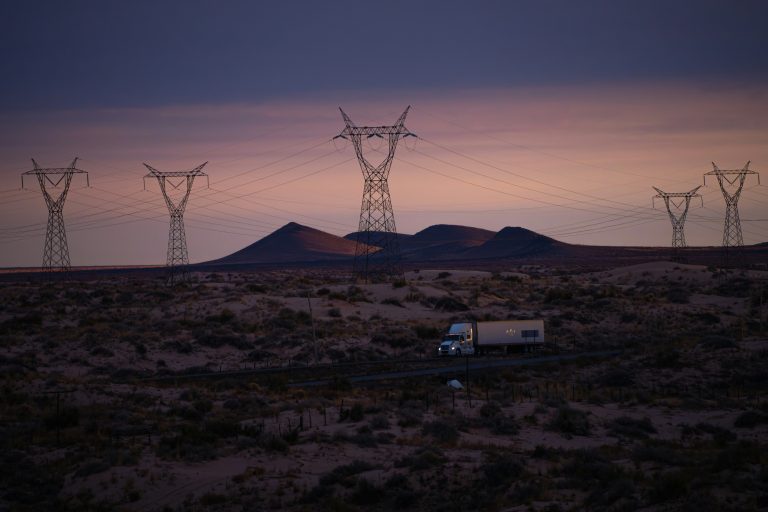

Research on Industrial Energy Efficiency Improvement in Shandong
Pathways and Policies
Chinese
Dec 2025
Report
ACTION 2035 Industry Subnational Climate Action
Summary:
This report analyzes pathways for improving industrial energy efficiency in Shandong Province, focusing on six high-energy-consuming sectors: iron and steel, non-ferrous metals, chemicals, petrochemicals, building materials, and thermal power. Drawing on field research, energy audits, and diagnostic data from over 500 industrial enterprises conducted by the Jinan Engineering Consulting Institute over five years, it identifies sector-specific bottlenecks and proposes a six-dimensional improvement framework encompassing capacity optimization, energy system optimization and waste heat recovery, production process energy efficiency, equipment upgrades, low-carbon fuel substitution, and digital management. The research draws on empirical field investigation, quantitative energy data analysis, and case study evaluation of three systemic energy-saving projects. It also provides policy recommendations for industrial decarbonization aligned with Shandong's economic transformation.
Related
-
An In-Depth Exploration of Carbon Reduction in the Steel IndustryChina's steel industry has nearly reached its limits in terms of energy efficiency, and large-scale carbon reduction will require breakthroughs in technology, processes, and business models.Interview SEP 2026
-
Decarbonizing Steel Industry Thermal SystemsThis report examines the low-carbon transition pathways for thermal/heating systems in China's steel industry, reviewing the policy drivers behind decarbonization and analyzing the technological trajectory across near-, medium-, and long-term horizons (2025–2060). It surveys and compares the applicability, economics, and emissions-reduction potential of key technologies—including waste heat recovery, system efficiency improvements, and hydrogen-based metallurgy—through in-depth case studies (HBIS Group's hydrogen metallurgy, Shougang Jingtang's process interface optimization, and Sinosteel/CISP's hydrogen-based smelting reduction, among others). It further identifies the practical barriers to scaling these technologies (high green hydrogen costs, renewable energy intermittency, stranded-asset risk, and weak cross-sector coordination mechanisms), and proposes policy recommendations to accelerate the sector's shift toward integration with renewable energy systems.Report AUG 2026
-
Can China’s zero-carbon industrial parks go global?In March 2026, China’s 15th Five Year Plan set a target to build “around 100 national level zero-carbon industrial parks” – zones for industrial production with net-zero or close to zero carbon emissions. It marked an upgrade to what had previously been a series of pilot projects around the country and catapulted such zones to a national priority.Interview JUL 2026
-
China Carbon Neutrality Tracker 2025 Annual ReportThis report tracks and quantitatively assesses the green and low-carbon transition of 30 Chinese provincial-level regions over the decade from 2013 to 2022 using the Subnational Low-Carbon and Green Index for China (Subnational LOGIC), which encompasses 26 indicators across four categories: carbon productivity; carbon emissions (covering energy, power, industry, buildings, transport, and agriculture); environmental conditions and land use; and policy systems and public participation. The analysis employs multiple classification frameworks—economic-geographic regions, economic development stages (Pioneer, Leading, Catching-Up, and Developing Economies), national major regional strategies, and energy development positioning—to identify structural divergences in transition patterns. It finds that scores improved across all provinces, with carbon productivity, energy, and power showing nationwide progress while transport, buildings, and industry remain key frontiers for deep decarbonization. The report also presents in-depth case studies of Guangdong, Jiangxi, Shanxi, and Hainan to examine differentiated transition pathways across economic development stages.Report JUN 2026
-
Consumption Constraints in Green Hydrogen Amino Acid IndustryExamines the green hydrogen, ammonia, and methanol industry in China, contends that the sector is shifting from a supply-side capacity-expansion phase to a "demand-constrained" phase where commercial viability depends on forming a closed-loop offtake and consumption system, identifies critical bottlenecks—including high production costs (2–3 times higher than conventional routes), insufficient port refueling infrastructure, heavy reliance on volatile international certification (e.g., ISCC) and external demand, and the failure of green premiums to translate into stable domestic willingness-to-pay—and proposes a strategic policy reorientation from merely "building production capacity" to actively "creating demand" through enforceable domestic demand-side mechanisms (e.g., non-electric consumption targets, green procurement, and carbon market integration), enhanced domestic green certification and pricing capabilities, consumption-side incentives, and stricter project screening focused on commercial closure, in order to unlock the industry's low-carbon value, reduce dependence on external rules, and support its sustainable commercial scaling and contribution to China's energy transition.Commentary JUN 2026
-
Hainan’s Model for Promoting the Adoption of Battery-Swap Heavy-Duty TrucksHainan has built and put into operation 37 battery-swapping stations for heavy-duty trucks, providing basic coverage of the island’s main highways and key industrial parks, thereby effectively advancing the transition of new-energy heavy-duty trucks from pilot projects in typical application scenarios to full-scale electrification across the region.Op-ed MAY 2026