

China's Carbon Neutral Opportunity
The Growing Economic Advantages and Co-Benefits of Setting Aggressive Decarbonization Goals in the 14th Five-Year Plan and Beyond
English
JAN 2021
Report
Climate Governance Energy Transition
Summary:
This report makes the case that China's carbon neutrality goal presents a significant economic opportunity rather than a burden. It argues that renewable power technologies like solar and wind have reached cost competitiveness thresholds, making decarbonization less expensive than continuing to rely on coal in much of China. The report examines the economic advantages of accelerated decarbonization, including enhanced export competitiveness in clean technologies, co-benefits such as improved air quality and energy security, and job creation potential. It recommends peaking China's carbon emissions by 2025 as a core economic strategy.
Suggested citation:
Chris Busch, Ma Jun, Hal Harvey, Hu Min. (2021). China's Carbon Neutral Opportunity: The Growing Economic Advantages and Co-benefits of Setting Aggressive Decarbonization Goals in the 14th Five-Year Plan and Beyond. Beijing: Institute for Global Decarbonization Progress (iGDP).
Related
-
An In-Depth Exploration of Carbon Reduction in the Steel IndustryChina's steel industry has nearly reached its limits in terms of energy efficiency, and large-scale carbon reduction will require breakthroughs in technology, processes, and business models.Interview SEP 2026
-
China’s New Carbon-Intensity Measure Has Not Changed Its Climate PledgesExpanding carbon intensity to include industrial process emissions strengthens longer-term decarbonization, argue Hu Min, Li Xindi, and Yang Li.Op-ed AUG 2026
-
How Can the Oil and Gas Industry Navigate the “Deep Waters” of Green Transition?The Petroleum Business Daily conducted an exclusive interview with Yang Li and Liu Xueye, experts from the Institute for Green Innovation and Development (iGDP), to provide an in-depth analysis of the strategic restructuring and breakthrough strategies for the oil and gas industry during the 15th Five-Year Plan period.Interview AUG 2026
-
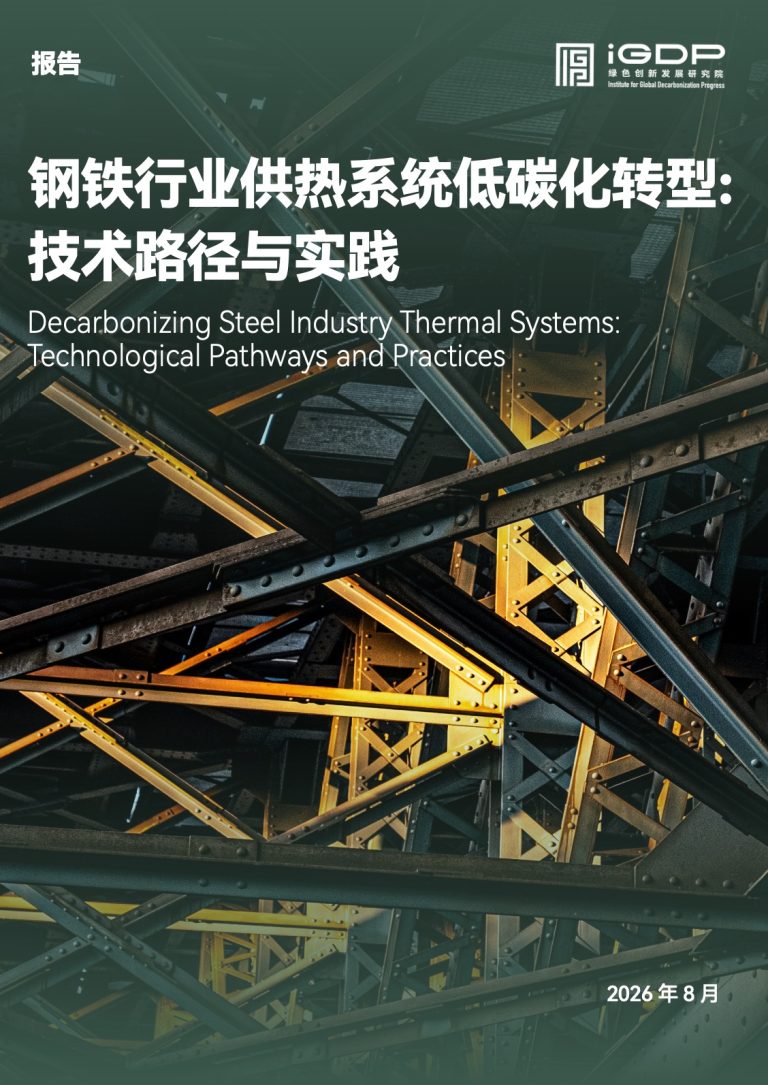
Decarbonizing Steel Industry Thermal SystemsThis report examines the low-carbon transition pathways for thermal/heating systems in China's steel industry, reviewing the policy drivers behind decarbonization and analyzing the technological trajectory across near-, medium-, and long-term horizons (2025–2060). It surveys and compares the applicability, economics, and emissions-reduction potential of key technologies—including waste heat recovery, system efficiency improvements, and hydrogen-based metallurgy—through in-depth case studies (HBIS Group's hydrogen metallurgy, Shougang Jingtang's process interface optimization, and Sinosteel/CISP's hydrogen-based smelting reduction, among others). It further identifies the practical barriers to scaling these technologies (high green hydrogen costs, renewable energy intermittency, stranded-asset risk, and weak cross-sector coordination mechanisms), and proposes policy recommendations to accelerate the sector's shift toward integration with renewable energy systems.Report AUG 2026
-
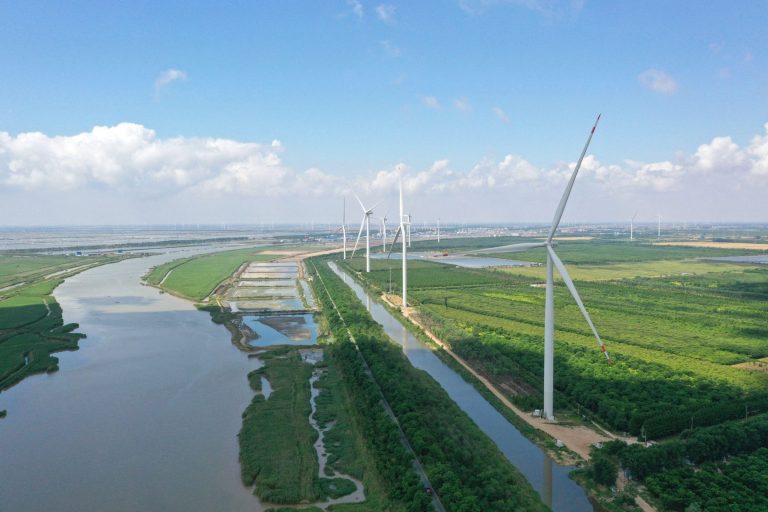
Can China’s zero-carbon industrial parks go global?In March 2026, China’s 15th Five Year Plan set a target to build “around 100 national level zero-carbon industrial parks” – zones for industrial production with net-zero or close to zero carbon emissions. It marked an upgrade to what had previously been a series of pilot projects around the country and catapulted such zones to a national priority.Interview JUL 2026
-
Green Power Consumption Faces New ChallengesWith the rapid growth in installed capacity, the core challenge facing the power system is shifting from “whether we can generate more green electricity” to “whether we can effectively utilize green electricity at the right time and place.”Interview JUL 2026