

October 3 to 11, 2026
Bangkok, Thailand
From October 3 to 11, 2026, Bangkok Climate Action Week 2026 (BKKCAW 2026) was held across Bangkok, Thailand. On October 11, the Institute for Global Decarbonization Progress (iGDP) and the Carbon Neutrality and Climate Change Thrust within the Society Hub at the Hong Kong University of Science and Technology (Guangzhou) co-hosted a seminar on Asia’s green and low-carbon transition pathways and climate action.
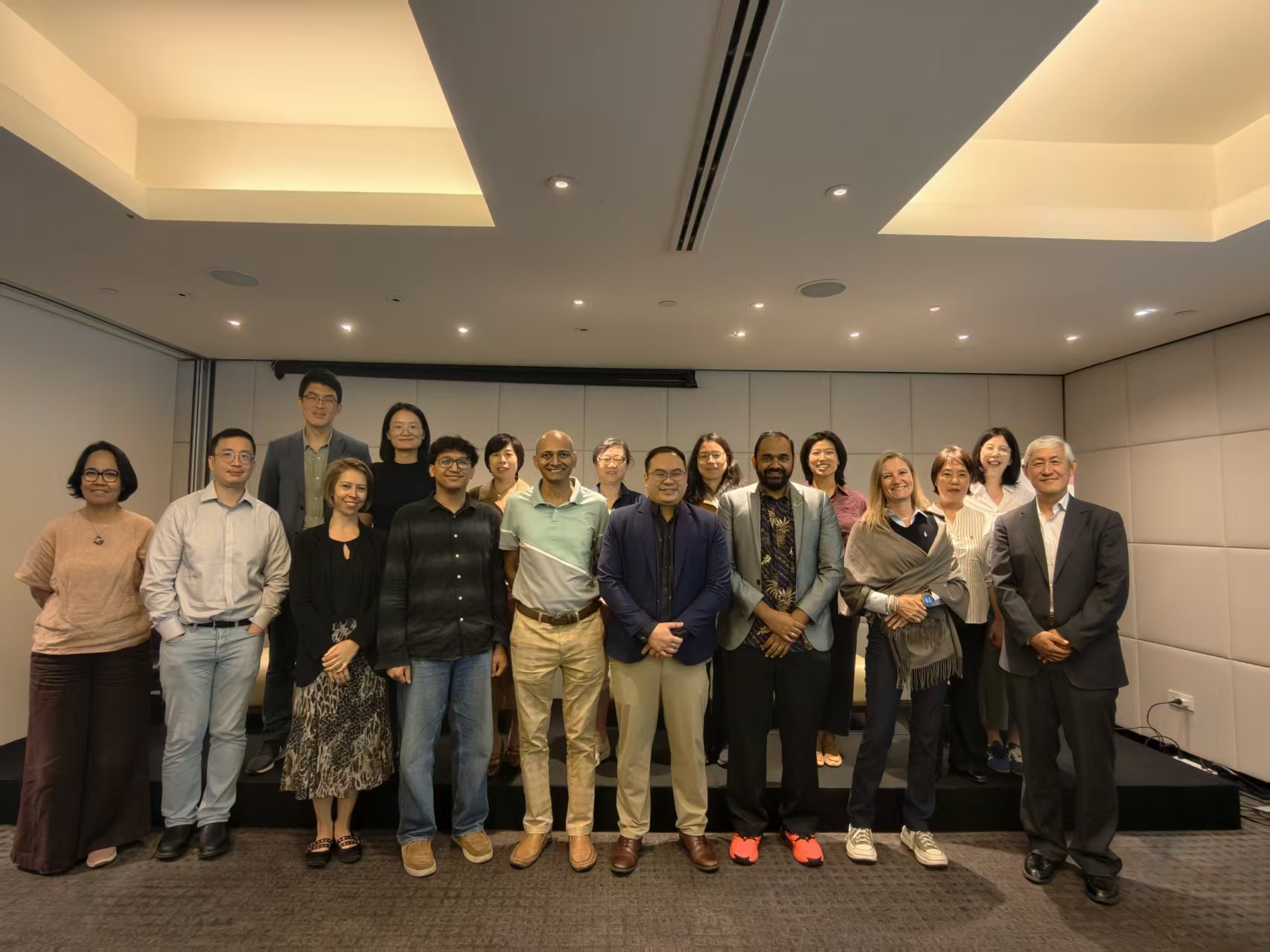
From October 3 to 11, 2026, Bangkok Climate Action Week 2026 (BKKCAW 2026) was held across Bangkok, Thailand. On October 11, the Institute for Global Decarbonization Progress (iGDP) and the Carbon Neutrality and Climate Change Thrust within the Society Hub at the Hong Kong University of Science and Technology (Guangzhou) co-hosted a seminar on Asia’s green and low-carbon transition pathways and climate action. The seminar brought together researchers and practitioners from China, Nepal, Malaysia, Indonesia, Singapore, Thailand, and India. Their expertise spanned energy and climate policy research, the renewable energy industry, carbon finance, artificial intelligence, and social development, bringing diverse perspectives to the discussions.
Asian countries differ in their stages of development, energy mixes, resource endowments, and policy implementation capacity. Their pathways towards a green and low-carbon transition vary accordingly. Advancing a deep transformation requires both a clear long-term direction and responses to immediate needs for energy security, economic growth, and people’s livelihoods. A central question at the seminar was how to strengthen the links between research on long-term transition pathways and policy choices today and over the next five to ten years.
Through three presentations and two roundtable discussions, the seminar explored Asia’s green and low-carbon transition pathways, how research can better inform policy discussions, and opportunities for regional research exchange and collaboration. Attention was given to the practical needs and shared challenges of developing countries and emerging economies as they navigate the transition.
Accelerating Asia’s Energy Transition: Technology and Market Shifts Through the Lens of China, Nepal, and Beyond
During the presentation session, three speakers addressed pathways to accelerate Asia’s energy transition, transport decarbonization in Nepal, and China’s long-term emissions scenarios and policy analysis, respectively. Their presentations examined both long-term goals and near-term actions, including the conditions needed for implementation.
Advances in clean energy technologies and falling costs are opening up new possibilities for Asia’s energy transition. Drawing on real-world examples from China, Nepal, and other countries, the first research presentation explored how these changes are shaping transition pathways and how countries can seize the opportunities they offer.
In China, developments in solar PV, electric heavy-duty trucks, and green hydrogen are reshaping energy production and consumption, industrial development patterns, and business models. In Nepal, transport electrification is closely linked to reducing dependence on imported fuels and developing local industries. It offers opportunities to advance the energy transition, strengthen national energy security, and support economic development.
As technologies and markets evolve rapidly, transition modelling needs to keep its assumptions up to date and provide more specific answers about actions needed over the next few years, along with adjustments to electricity grids and policy frameworks. Reducing emissions of short-lived climate pollutants should also be a priority for accelerating climate action.
The speaker also noted that these examples offer lessons that Asian countries can learn from one another. Whether technological advances and falling costs translate into transition opportunities, however, depends on each country’s resource endowments, industrial base, and development needs.
Decarbonizing Nepal’s Transport: Fleet Renewal, Freight Transition, and Power System Coordination
For Nepal, whose transport sector relies on imported oil, electrification is central to both emissions reduction and energy security. The second presentation used scenario analysis to compare changes in energy demand and emissions under different vehicle mixes, fuel mixes, and fleet renewal rates, exploring policy options for decarbonizing Nepal’s transport sector.
The speaker noted that research on transport electrification must consider both new vehicle sales and vehicles already on the road. Even as electric vehicle sales grow, existing petrol and diesel vehicles may remain in use for years, continuing to generate emissions. Vehicle retirement and replacement mechanisms therefore directly affect the pace of emissions reduction. Recently sold petrol and diesel vehicles could influence emissions over the next two decades.
The freight transition also deserves greater attention. As passenger cars and two-wheelers become increasingly electrified, public transport, commercial vehicles, and medium- and heavy-duty freight vehicles need targeted policy, financing, and infrastructure support to unlock further emissions reductions.
Electrification must also be coordinated with the power system. Nepal’s hydropower-dominated electricity supply offers opportunities to reduce dependence on imported fuels, but dry-season power availability must be factored into planning. Additional charging demand should be incorporated early into plans for power generation, grids, and charging infrastructure, with smart charging, time-of-use tariffs, and load management helping to manage that demand.
The speaker emphasized that transport decarbonization requires a combined approach to electrifying new vehicles, renewing the existing fleet, and transitioning freight transport. Stronger coordination across transport, energy, and fiscal policies is essential to advancing both emissions reduction and energy security.
China’s Long-Term Emissions Pathways: Identifying Near-Term Priorities and Gaps to Carbon Neutrality
The third presentation focused on China’s medium- and long-term carbon emissions scenarios and transition pathways. Xindi Li, Energy Transition Program Director and Senior Analyst at iGDP, presented long-term energy and emissions scenario analysis using the EPS China model. The analysis compared different policy packages and identified gaps between current measures and the carbon neutrality goal. Using a system dynamics approach, the model simulates interactions across sectors and policies to assess their effects on energy consumption, emissions, and the economy.
Increasing renewable energy integration is a key near-term priority for emissions reduction, supported by energy storage deployment, greater grid flexibility, and industrial electrification. As industry, transport, and buildings use more electricity, the power system must meet growing demand and continue to reduce emissions from electricity generation.
Industry and buildings still offer scope for further improvements in energy efficiency and electrification to support long-term carbon neutrality. Technologies such as green hydrogen and carbon capture and storage will also contribute to deep emissions reductions. In transport, priorities include continued electrification of heavy-duty freight vehicles and exploration of low-carbon fuel alternatives for shipping and aviation. Other long-term considerations include reducing non-CO₂ greenhouse gas emissions from industry and other sectors, and how carbon and electricity markets can support the transition.
Li noted that different stages of emissions reduction require corresponding policy packages. Near-term efforts should focus on renewable energy integration, energy efficiency, and electrification, alongside early planning for emissions reductions in hard-to-abate sectors and for non-CO₂ greenhouse gases. By comparing emissions pathways across scenarios and the contribution of individual measures, the EPS China model provides analytical support for setting policy priorities and determining the order of implementation.
In the second half of the seminar, two roundtable discussions explored how research can better address the practical needs of Asia’s green and low-carbon transition, focusing respectively on policy practice and regional cooperation. Drawing on experiences from China, Malaysia, Thailand, Indonesia, and other countries, participants discussed power system transformation, policy and investment, project financing, and the social impacts of the energy transition. They also explored opportunities to strengthen regional cooperation through cross-country case comparisons, exchanges on research methods, and capacity building.
From Pathways to Implementation: Linking Research and Policy Through Country Experiences
The first roundtable focused on “From Pathways to Policy.” Drawing on experiences from China, Malaysia, and Thailand, participants discussed how transition research can better support practical action, examining power systems, policy and investment, and project financing.
As renewable energy expands rapidly, adapting power systems to changing supply and demand has become a key issue in the energy transition. A speaker from China highlighted the importance of coordinating renewable energy development with grid planning and market mechanisms. Technological advances and market shifts can outpace planning assumptions, making it essential for research to identify emerging needs for grid connection, renewable energy integration, and system flexibility. Discussions of China and Malaysia also addressed rising electricity demand from artificial intelligence and data centers. Participants explored how to meet this demand by expanding low-carbon electricity supply and improving arrangements for local renewable energy supply and self-generation for on-site consumption.
Another focus was how policy and infrastructure can create favorable conditions for clean energy investment. A speaker from Malaysia highlighted the importance of policy certainty, funding, and infrastructure development in bringing projects to fruition. Participants noted that clear, stable policies help investors plan, and supporting infrastructure is critical to project delivery. Building on the discussion of grid planning and market mechanisms in China, they examined how policies can keep pace with the transition and better align clean energy investment with power system development.
How can carbon finance help turn projects into reality? Bangkok’s electric bus project offered a concrete example. Participants discussed international cooperation under Article 6 of the Paris Agreement, examining how carbon finance can help close upfront funding gaps. They also considered practical challenges, including project approval, expected revenues from carbon credits, and investment risks. The effectiveness of financing support, however, also depends on the conditions for implementing each project.
The roundtable connected long-term transition pathways with policy implementation, project financing, and supporting infrastructure. Experiences from different countries highlighted the need to adapt research methods and tools to local conditions so they can provide more targeted support for practical decisions.
Exploring Regional Research Cooperation on Shared Challenges
The second roundtable focused on “From Research to Regional Cooperation.” Drawing on experiences from China, Malaysia, and Indonesia, participants explored how cross-country case comparisons and collaborative research can better support national transitions.
On distributed energy, a speaker from China shared experiences with rural solar PV. As residents become both electricity consumers and producers, new challenges arise in grid connection, energy storage, and market participation. Participants discussed how aggregating distributed resources can support rural solar development and what conditions would be needed to apply these approaches in other Asian countries. A speaker from Malaysia described how rural electricity supply solutions can account for local resources, costs, and operation and maintenance capacity, drawing on the differing energy conditions in Peninsular Malaysia, Sabah, and Sarawak.
On implementing renewable energy targets, a speaker from Indonesia highlighted practical requirements for deployment, including land availability, project procedures, installation costs for households, and coordination between central and local institutions. Experiences from Malaysia also underscored the need to align policies at national, state, and local levels. Participants noted that research must examine both technology pathways and the practical conditions for policy implementation and governance to help identify barriers to achieving targets.
The discussion also addressed how the energy transition affects conventional energy assets, investment, and workers. Contributions from Indonesia examined how existing coal-fired power assets, investment recovery, and stakeholder interests influence the pace of transition. A speaker from Malaysia highlighted worker upskilling, job transitions, and changes in income. These issues offer starting points for joint research on a just transition.
Participants also discussed applications of artificial intelligence in energy management, load forecasting, and building energy efficiency. They explored how stronger links among researchers, technology developers, project implementers, and investors could make research more responsive to practical needs.
For future cooperation, participants considered opportunities for case comparisons, exchanges on research methods, and capacity building. They also discussed the need for and value of voluntary research exchanges for developing countries and emerging economies. Cooperation could begin with specific policy questions and small-scale thematic exchanges, gradually building lasting connections for dialogue and mutual learning that respect national differences.
The seminar concluded with lively exchanges among participants. Connecting long-term transition pathways with current policy and practical needs, it brought together diverse perspectives on Asia’s green and low-carbon transition. The discussions helped identify approaches that countries could learn from one another, as well as shared issues for further discussion.
As co-organizers, iGDP and the CNCC HKUST(GZ) brought complementary expertise to the seminar. iGDP has long focused on green and low-carbon development, advancing practical energy and climate solutions through policy research and strategic communications. The CNCC HKUST(GZ) has extensive academic research experience in energy system modelling, climate policy analysis, and decision support.
The seminar marked a starting point for their joint efforts to promote exchanges among Asia’s emerging economies. Both organizations look forward to staying connected with more researchers and practitioners across Asia, sharing experiences and exploring methods on issues of common interest to advance the region’s green and low-carbon transition.
-
 Seminar on Green Power Integration in Emerging Use CasesPast event JUN 2026
-
 Climate Catalyst: From “Old Houses” to “Good Homes” — Seminar on Low-Carbon Renovation of Existing BuildingsPast event APR 2026
-
 Climate Catalyst × Tiangong Academic Salon — Green Fuels and Emission Reduction in China’s Transport Sector: Application Pathways and Industrial DevelopmentPast event JAN 2026


